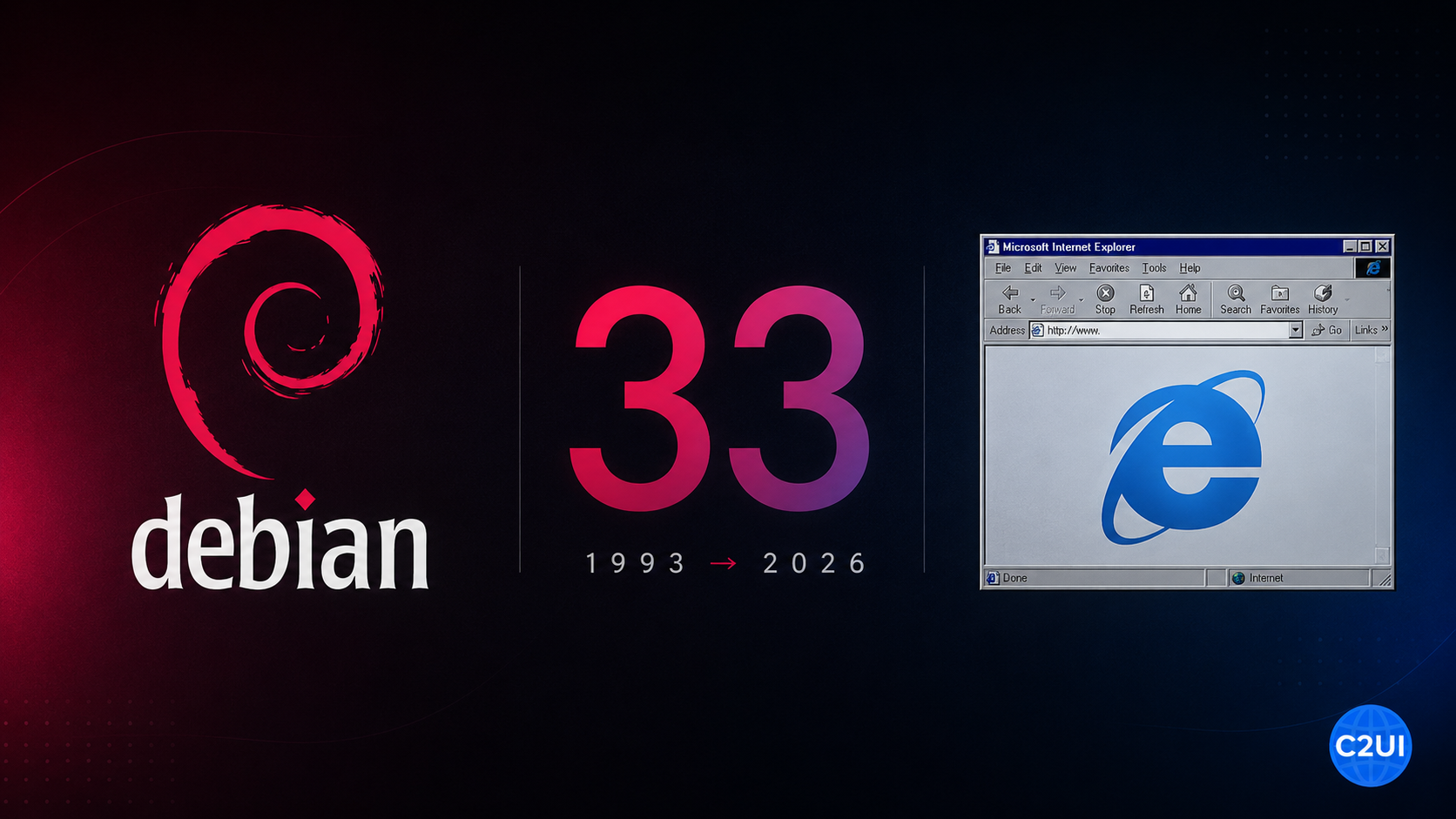
Today is August 16. Most people will scroll past it without a second thought. But if you work with computers, this date carries more weight than it looks like. Two very different pieces of software share the exact same birthday, just two years apart.
One of them is still alive, still updated, and still trusted by millions of servers around the world. The other one is dead, and most people are glad it is.
A coincidence almost nobody talks about
Debian and Internet Explorer do not have much in common. One is a free, community built operating system. The other was a corporate web browser bundled with Windows. But both of them were introduced to the world on August 16, in different years, and their stories after that point could not be more different.
August 16, 1993: Debian is born
On this day, a student named Ian Murdock posted a message to a newsgroup called comp.os.linux.development, announcing a new Linux distribution. He called it Debian, a name made by combining his name with his girlfriend's name, Debra.
At the time, it was just one more attempt at building a Linux system. Nobody could have guessed it would still be around, and still growing, more than three decades later.
A few quick facts about Debian's early days:
- It started as a one man project, later opened up to volunteers from the newsgroup
- It was built with a strong focus on being free and community driven, not owned by any company
- The naming convention for releases (things like "Bookworm" and "Trixie") comes from characters in the movie Toy Story, a tradition started because a former project leader worked at Pixar
Today, Debian is on version 13, codenamed "Trixie." It currently has security support planned until August 2028, with long term support continuing all the way to 2030. It runs on servers, laptops, embedded devices, and even shows up in spacecraft systems. If you want to check your own Debian version, you can run this in your terminal:
cat /etc/debian_version
August 16, 1995: Internet Explorer 1.0 is born
Exactly two years later, on the same date, Microsoft quietly released Internet Explorer 1.0. It was not a big launch. It was bundled inside a paid add on pack for Windows 95 called Microsoft Plus!, alongside things like desktop themes and a 3D pinball game.
The first version of IE was tiny, just under 1MB in size, and it was built by a small team of five or six people. It was not even an original creation. It was based on a licensed version of a browser called Spyglass Mosaic.
Nobody at Microsoft treated it as a big deal at first. But things changed fast. Bill Gates sent his famous "Internet Tidal Wave" memo just a few months before IE launched, pushing the company to take the internet seriously. From there, Internet Explorer grew into the most used browser in the world for over a decade, before slowly losing ground to Chrome and eventually getting shut down completely, replaced by Microsoft Edge.
Where they stand today
| Debian | Internet Explorer | |
|---|---|---|
| Born | August 16, 1993 | August 16, 1995 |
| Built by | Volunteer community | Microsoft |
| Status today | Actively developed, version 13 "Trixie" | Discontinued in 2022 |
| Known for | Stability, being free, powering servers | Being bundled with Windows, later becoming a joke |
| Legacy | Still trusted for production systems | Remembered mostly as "the browser to download Chrome" |
Final thoughts
"Debian is still not only an actively developed Linux distribution but also one of the projects that helped define how a large, international free software community can build and maintain an operating system together."
What makes this date interesting is not just the coincidence. It is the contrast. One project was built slowly by volunteers who cared about it, with no company behind it forcing updates or deadlines. The other was built fast by a huge company trying to win a business fight, and it disappeared the moment it stopped being useful to that fight.
Debian is still here because people still choose to build it. Internet Explorer is gone because people were never really choosing it in the first place, they were just stuck with it.
So next August 16, if you remember only one of these two, you will already know which one earned that memory.
Sources
- Debian Project, Debian Day 2026 announcement
- Debian.org official release notes for Debian 13 "Trixie"
- Web Design Museum, history of Internet Explorer 1.0
- Neowin, look back at Internet Explorer's 1995 launch